Swimming Techniques Learn

Advanced Swimming Skills and Techniques to Improve Stroke Efficiency

Many swimmers train hard but still feel slow in the water, and the real problem is usually technique rather than fitness. Small flaws in body position, the catch, or breathing quietly cost seconds and drain energy before the finish.

This article breaks down the technical adjustments that help swimmers move through the water with less resistance and more power per stroke.
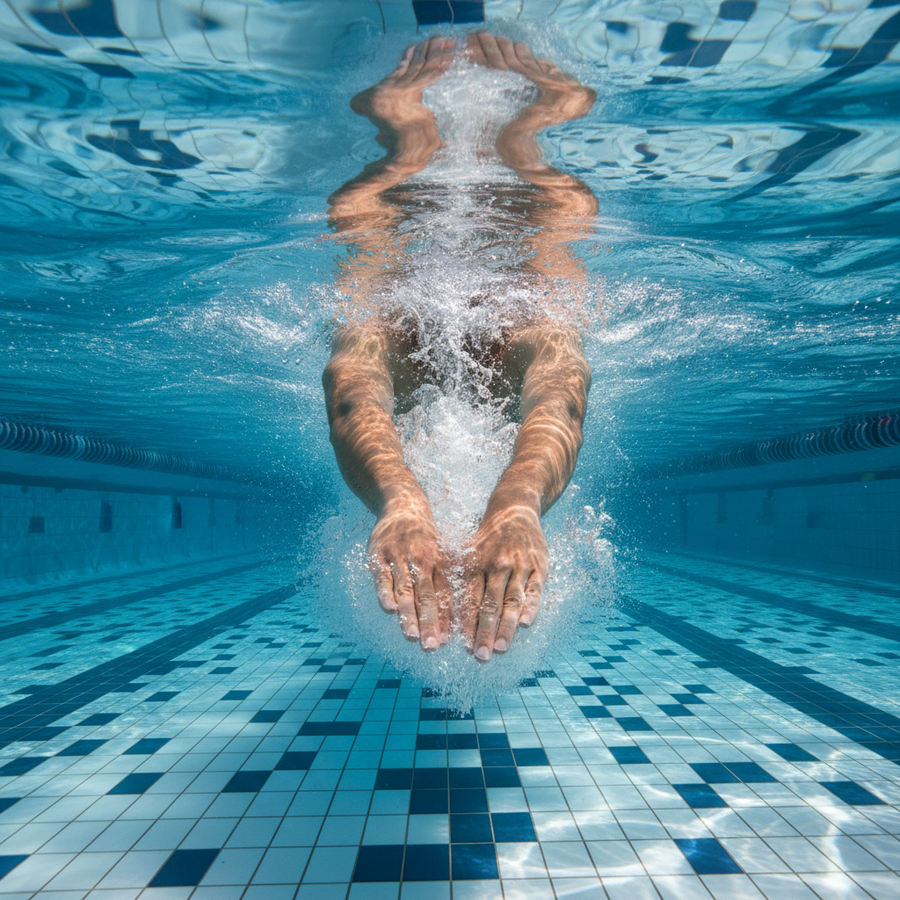
Advanced Swimming Skills and Techniques to Improve Stroke Efficiency

Understanding Stroke Efficiency in the Water

Stroke efficiency comes down to how much distance a swimmer covers for the effort they put in, and it starts with body position. A swimmer who rides high and flat in the water, with hips close to the surface and a long, straight line from fingertips to toes, cuts through far less resistance than one whose legs sink or whose hips sway from side to side. Core engagement plays a bigger role here than most swimmers realize, since a stable trunk keeps the body aligned even as the arms and legs generate propulsion.

Head position also matters more than it seems. Looking too far forward lifts the hips and legs, creating drag, while looking too far down can round the shoulders and disrupt rotation. A neutral head position, with the eyes angled slightly down and forward, tends to support the best overall alignment.

Refining the Catch and Pull for More Propulsion

Once body position is solid, the next major gain comes from the catch, the moment the hand first grips the water at the front of the stroke. A high elbow catch, where the forearm and hand press backward against the water rather than downward, generates far more forward propulsion than a straight-arm pull.

Readers who want a complete breakdown of stroke mechanics across every discipline, along with rules, gear recommendations, and conditioning advice, can visit the swimming guide, which brings together every content category in one place including Gear Guides, Skills and Techniques, Rules and Formats, Training and Conditioning, and a Beginner's Guide.

Breathing Patterns and Rotation for a Smoother Rhythm

Breathing is often the piece that breaks down first when a swimmer gets tired, and poor breathing mechanics can undo even a strong pull. Rotating the body along its long axis, rather than lifting the head straight up, allows the mouth to clear the water with minimal disruption to the stroke.

Bilateral breathing, where a swimmer alternates breathing sides every three strokes, helps even out stroke mechanics on both sides of the body. The swimming skills and techniques guide covers additional articles focused on drills, execution, and performance improvement for every stroke.

Turning Technical Gains Into Race Ready Speed

Technical improvements only matter if they hold up under fatigue and race pace, so the final step is practicing these adjustments at increasing intensity. Short, focused sets of twenty five to fifty meters allow a swimmer to concentrate on one technical cue at a time, such as catch timing or rotation, without the mechanics collapsing under exhaustion. Video analysis, even from a phone at poolside, can reveal habits that are hard to feel in the moment.

Coaches often recommend building technical work into every practice rather than treating it as a separate session, since stroke habits formed during easy swimming tend to carry over directly into race conditions. Consistency across weeks, not a single breakthrough practice, is what turns these adjustments into lasting speed.

Summary

Stroke efficiency comes from body position, a strong catch, and controlled breathing working together rather than any single fix. Small, consistent technical adjustments, practiced deliberately, tend to produce more lasting speed than simply swimming more yardage. Swimmers who are new to the sport or want to strengthen their fundamentals first can explore the beginner's guide before working through these more advanced technique adjustments.