Volleyball Techniques Learn

Advanced Volleyball Skills and Techniques for Serving, Setting, and Defense

Many volleyball players can hit hard or pass cleanly in isolation but still struggle to bring serving, setting, and defense together into a complete, reliable game. Each of these skills has its own technical demands, and weakness in any one of them creates a gap that opponents can exploit.

This article breaks down the technique behind serving, setting, and defensive play to help players round out their overall game.
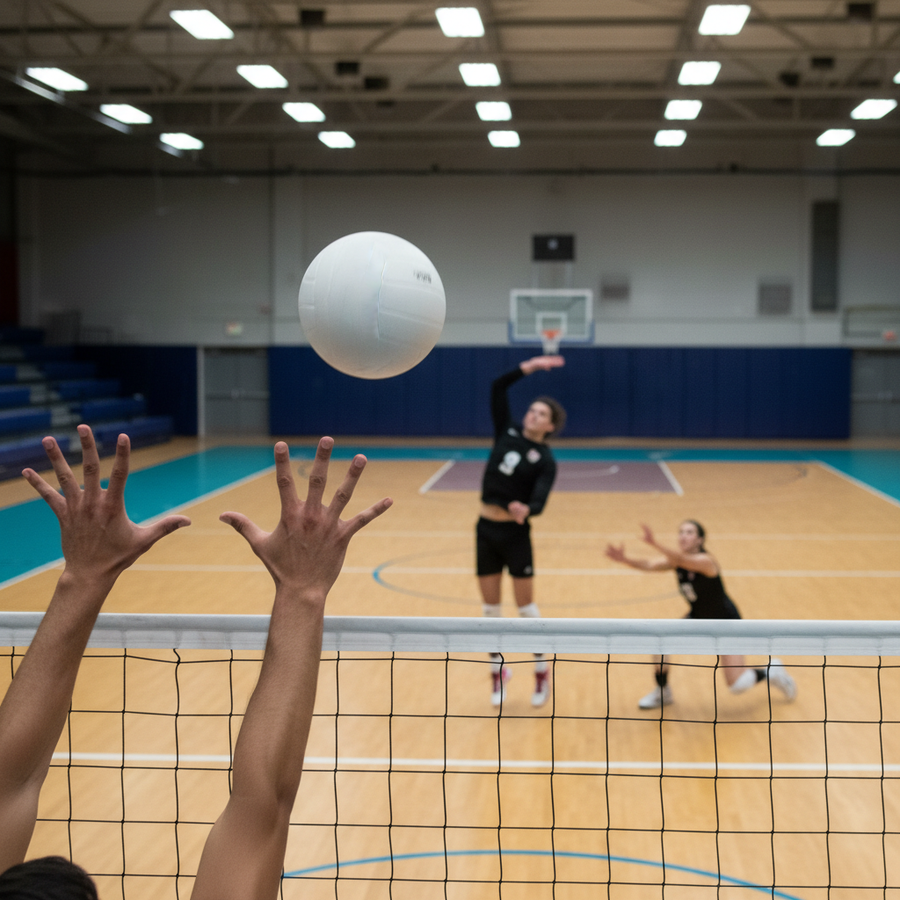
Advanced Volleyball Skills and Techniques for Serving, Setting, and Defense

Building a Consistent and Aggressive Serve

A reliable serve starts with a consistent toss, since even a technically sound swing cannot recover from a poor toss placement. Tossing the ball slightly in front of the hitting shoulder, at a height that allows a full arm swing, gives a server the best chance at consistent contact.

Follow through matters as well: snapping the wrist through the ball, rather than pushing it, generates more pace and a sharper trajectory. Serving with intention, aiming for specific zones or seams between defenders, turns a routine serve into an offensive weapon.

Refining Setting Technique for Accurate Ball Placement

Setting accuracy depends on early footwork and getting square to the target before the ball arrives, rather than reaching or twisting at the last moment. Soft hands, with fingers spread and wrists slightly cocked, allow a setter to redirect the ball smoothly without a noticeable double contact.

Players who want to explore setting drills alongside serving, defense, and conditioning can visit the volleyball guide, which brings together Gear Guides, Skills and Techniques, Rules and Formats, Training and Conditioning, and a Beginner's Guide in one place.

Improving Defensive Positioning and Digging Technique

Strong defensive play starts with anticipation, reading the hitter's approach and arm swing to predict the likely direction of the attack before contact happens. A low, athletic base with knees bent and weight forward allows a defender to react quickly in any direction.

Platform control on the dig, keeping the arms flat and angled toward the target rather than swinging at the ball, produces a more controllable pass. The volleyball skills and techniques guide offers additional articles focused on execution and performance improvement.

Connecting Serve, Set, and Defense Into Team Play

These three skills do not operate in isolation during a real match, since a strong serve can force a weak pass, which in turn limits a setter's options and shapes the defensive rotation that follows. Understanding how each skill influences the next helps players make smarter decisions in the moment.

Communicating clearly with teammates about coverage and rotation, especially after a serve or a defensive dig, keeps the team organized and reduces the confusion that often leads to easy points for the opponent.

Summary

A complete volleyball game depends on combining a reliable serve, accurate setting, and sharp defensive positioning rather than excelling at just one skill. Understanding how these elements connect during live play helps players contribute more consistently to their team. Players new to the sport can start with the beginner's guide before progressing to these more advanced techniques.