Badminton Beginners Reference

Badminton Footwork for Beginners: A Simple Guide

Most beginners think badminton is all about power and hitting the shuttle hard, so they stand too far back or lunge at every shot and get tired quickly. That leads to missed shots and poor court coverage during rallies.

This article will teach you the essential footwork and court movement every new player needs to start playing smarter.

Badminton Footwork for Beginners: A Simple Guide

What badminton footwork is and why it matters

Badminton footwork is how you move your feet so your body gets into the right position to hit the shuttle with balance and control. Good footwork is not fancy steps; it is efficient movement that saves energy and gives you time to see the shuttle and set up the racket. The badminton ready position is the starting point: knees slightly bent, weight on the balls of your feet, feet shoulder-width apart, racket up and in front. From this stance you must stay light and reactive rather than flat-footed and waiting for the shuttle to arrive.

Balance is the backbone of every stroke. If your weight is where it should be you can drive forward for a net kill, push off for a jump smash, or step back for a deep clear without losing balance. Movement before hitting the shuttle means arriving a split-second early so your racket can swing smoothly; the footwork creates the swing, not the other way around. For beginners, practice the ready stance and small adjustment steps until changing direction feels natural. Explore our badminton guide to learn more about every stage of badminton, from beginner fundamentals to advanced skills.

How beginners should move around the badminton court

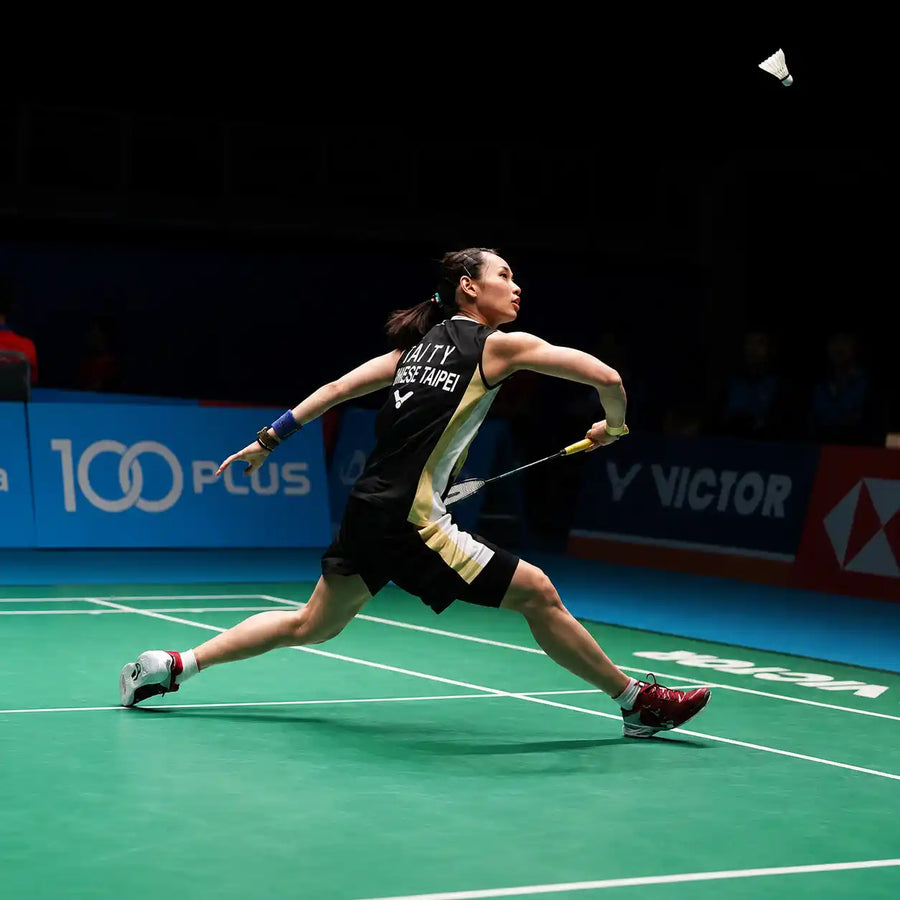
A simple rule for where to stand is this: move to the shuttle, play the shot, then return to your base position. The badminton base position is roughly the center of your half-court, slightly forward of the center line so you can cover net and mid-court shots. When moving forwards, step with the racket foot first then bring the back foot through; keep short, quick steps rather than lunging. Short steps let you stop and hit with control. For moving backwards, push off with the front foot and take quick, small hopping steps to maintain balance; do not fall onto your heels or take one big step back.

Side movement is a crossover of small steps or a split step pattern: step to the side with the nearest foot, then bring the other foot across to regain balanced stance. When you reach the shuttle, plant your feet so you can swing comfortably without twisting your hips awkwardly. After the shot, recover to the centre, take the shortest path that keeps you balanced, usually a diagonal step back to base rather than a straight-line sprint. This reduces the distance you need to cover on the next rally and keeps you ready for the opponent’s next move.

Common beginner footwork mistakes

Beginners make predictable errors that hurt court coverage and consistency. Standing flat-footed is one. If your weight is on your heels you cannot react quickly; the result is late shots and hurried swings. Chasing the shuttle is another: players sprint after impossible shuttles instead of playing to keep a good position. This wears you out and invites more precise opponent play. Taking large steps looks athletic but breaks balance; long strides force you to slow down and adjust before hitting.

Forgetting to recover is a silent rally killer. A good player hits a shot and returns to base instantly; beginners often stay at the net or cling to one corner, leaving the rest of the court exposed. Poor balance shows up in exaggerated reaches, stretching for a return instead of stepping into position. Use match examples to see these errors: on a simple drop shot, a beginner who lunges and fails to recover lets an opponent smash the next ball; on wide clears, long reaching steps cause off-balance returns that sit up for the opponent. Recognize these habits early and treat them as technical issues rather than lack of fitness.

How beginners can improve footwork

Improvement comes from simple, consistent practices you can do alone. Shadow footwork is the most effective starting point: mimic match movements without a shuttle, rehearse moving from base to net, to backcourt, to side positions. Practise without a shuttle to focus solely on balance, rhythm, and body alignment. Rhythm matters, count your steps, use a steady pace, and make each movement deliberate so you condition muscle memory.

Beginner drills include the four-corner jog: start base, sprint to forehand corner, back to centre, to backhand corner, return to base; keep steps short and shoulders square. Another is ladder or cone drills to improve quickness and small-step control. Work on balance by holding your racket in playing position and landing softly on each step. Consistency beats long workouts; ten minutes of shadow footwork daily will help more than occasional long sessions. Finally, add simple shuttle drills later: straight drops, clears, and controlled smashes where the objective is foot placement, not power. Progress slowly, track repetition counts, and build a foundation you can rely on in matches.

Summary

This guide covers the basics of badminton footwork for beginners and why movement beats power early on. The main takeaway is to move with purpose: start in a good ready position, play the shuttle, then return to the base position. Continue building your badminton foundation with our badminton beginner's guide, where you'll find beginner-friendly guidance covering the essential skills, rules, techniques, and concepts every new player should learn.