Badminton Beginners Reference

Badminton Serve for Beginners: Simple Tips to Serve Consistently

Most beginners feel lost the first time they stand at the service line and wonder whether a serve can win a point or just start the rally. Serving looks small, but done well it sets you up to control the point and build confidence on court.

This article will teach the essentials of how to serve in badminton and how to practice a reliable beginner serve.

Badminton Serve for Beginners: Simple Tips to Serve Consistently

What a serve is and why it matters

A serve is the shot that begins every rally, so think of it as your first impression. A good serve does two things: it gets the shuttle into play legally, and it puts the opponent under pressure or out of position. That pressure can be subtle, a low tight serve that forces a weak return, or more deliberate, like a high deep serve that pushes the opponent to the back of the court. For beginners learning how to serve in badminton, learning the basics of placement and consistency matters more than trying to blast winners from the start.

Where you stand and how you align your body influence every serve. Foot placement, grip and shuttle hold work together; change one and the feel of the whole action changes. Serving also teaches court awareness, knowing whether to push to the forecourt or the backcourt depending on singles or doubles. If you want a step by step reference later, you can explore the complete badminton guide to know more, but first master the simple habits below.

How beginners should perform a basic serve correctly

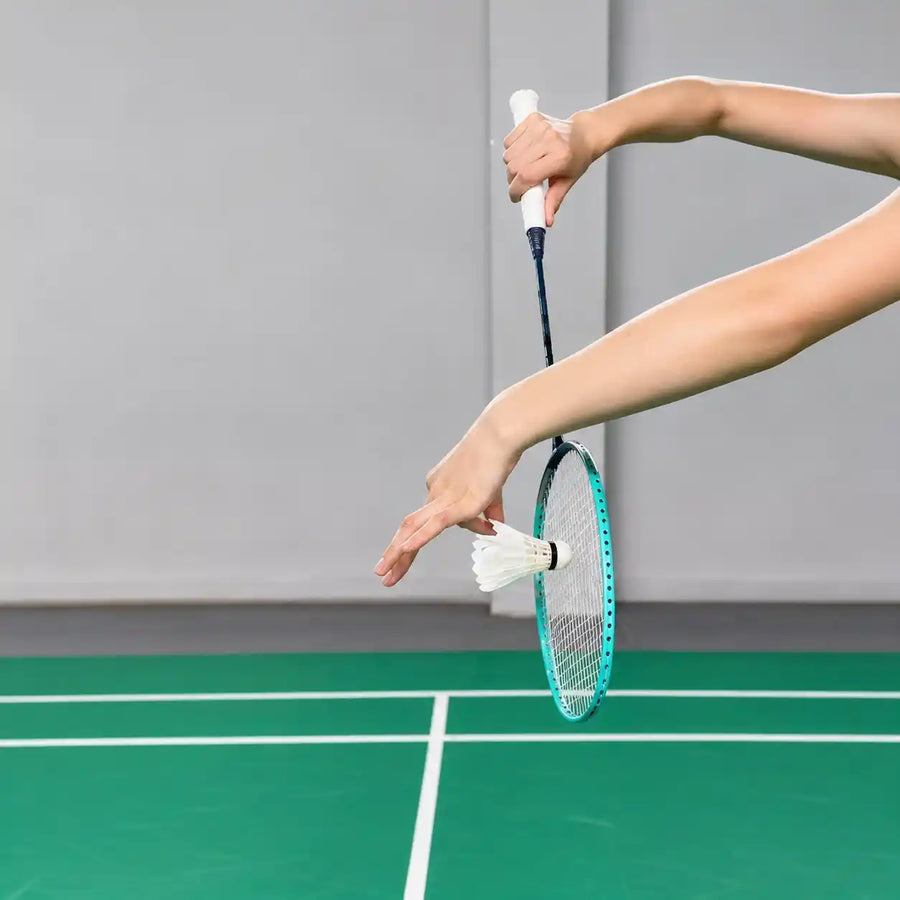
Start with a stable stance, lead with the foot on the side of your racket hand and keep weight slightly forward so you can move after the serve. Hold the racket with a relaxed forehand grip for low serves or a slightly firmer forehand grip for high serves. For the shuttle, pinch it between thumb and forefinger near the cork so you can release it cleanly; avoid gripping the feathers.

For a basic low serve, ideal for doubles and learning control, stand close to the short service line. Lower your racket to waist level; the racket head should point down slightly. Drop the shuttle from shoulder height toward the racket, swing the racket forward with a short, controlled motion, and make contact below waist height with the shuttle’s cork.

Follow through minimally so the shuttle travels just over the net and lands near the short line. For a basic high serve used in singles, use a longer underarm swing, contact the shuttle slightly earlier in the swing, and accelerate through to send the shuttle high into the backcourt. Keep your non-racket arm pointing at the shuttle to help with balance and direction. Practice each step slowly until your movement is smooth; accuracy beats power for a beginner badminton serve.

Common serving mistakes beginners make and why they happen

Beginners often push with the arm instead of using body rotation, which makes serves weak and inconsistent. If your wrist and shoulder are doing all the work, check your footwork, lack of hip turn and weight transfer limits racket speed. Another frequent error is holding the shuttle too high on the feathers, that gives a flat unpredictable contact and increases the chance of a fault. Holding the shuttle too low can make the release late and timing poor.

Many players try to serve too hard because they think power equals advantage, instead they miss the short target or hit the net. Tensing the grip causes jerky swings and poor feel. Nerves make beginners lift their shoulders and choke the racket, producing high easy returns. Use a simple drill, serve ten low serves aiming for the same spot, then switch to ten high serves aiming deep. The repetitive pattern reveals which technical habit is breaking down. For example, if your low serve keeps going long, you are likely releasing the shuttle too late or swinging too hard; shorten the swing and release earlier.

How beginners should practice serving and improve consistency

Consistent serving comes from focused short practice blocks rather than hour long aimless hitting. Begin each session with 10 slow deliberate serves concentrating on grip, shuttle hold and the point of contact. Use markers, cones or tape on court to give a visual target for low and high serves. Practice sets of five to ten serves to one spot, rest, then repeat; fatigue makes form collapse, so stop before you lose technique.

Include game like drills, serve and then move to the ready position to simulate real rallies, or serve then play a single return to practice your first step reaction. Record a few serves on your phone once a week to check racket angle and body alignment, often you will see small posture faults you did not feel. Work with a partner who calls out where the shuttle lands, or practice with a coach who can adjust your stance and release. Vary speed and placement in short blocks, five low, five wide, five deep, to build adaptability. Keep sessions short and focused, celebrate small improvements like five serves in a row to your target, and gradually lengthen practice as accuracy grows.

Summary

Serving sets the tone for every rally and becomes more reliable with consistent practice and good technique. The biggest beginner takeaway is to focus on accuracy, control, and proper serving mechanics before trying advanced serves. Continue building your badminton foundation with our badminton beginner's guide