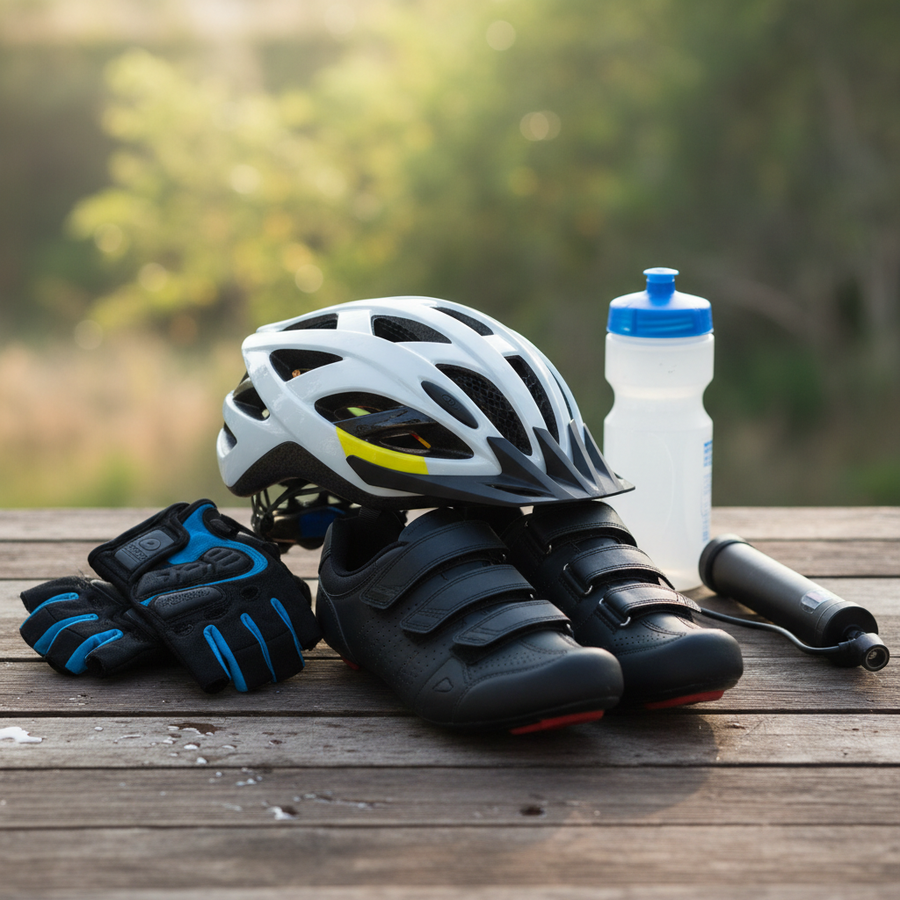
The first and most important item is a properly fitting helmet. No other piece of equipment carries the same direct consequence for rider safety. A helmet that fits incorrectly offers significantly less protection in a fall than one that sits level on the head, covers the forehead without tilting back, and fastens snugly under the chin. Consumer grade helmets in a wide price range meet the same basic safety certification requirements, so fit matters more than cost at the beginner level.
The second item is padded cycling shorts. This is the piece of equipment new riders most commonly skip and most frequently regret skipping. Cycling places sustained pressure on a relatively small contact area, and the chamois pad built into cycling shorts distributes that pressure and reduces friction significantly. A single pair of shorts makes rides of any length beyond thirty minutes noticeably more comfortable.
The third item is a floor pump with a pressure gauge. Tyres that are underinflated increase rolling resistance, make handling imprecise, and raise the risk of punctures from pinching the inner tube against the rim. A floor pump allows a rider to set pressure accurately to the level recommended on the tyre sidewall, which a portable hand pump cannot do reliably. This one item makes every ride more efficient and reduces mechanical problems.
The fourth item is a set of front and rear lights. Riding in low light without lights is both illegal in most countries and genuinely dangerous. Lightweight and rechargeable light sets are available at low cost and take seconds to fit or remove from the bike.
The fifth item is a multitool sized for cycling, which typically includes the allen keys needed to adjust saddle height, handlebar position, and other basic components. Being able to make minor adjustments mid ride or at home removes a significant barrier for beginners who would otherwise need to take the bike to a shop for small changes.