Cycling Techniques Learn

How to Corner, Brake, and Descend Like a Confident Cyclist

Cornering, braking, and descending are the three technical areas where most cyclists lose the most time and take the most risk, yet they receive far less deliberate practice than climbing or cadence work because they feel dangerous to get wrong. Without understanding the mechanics behind each skill, riders either hold back too much and lose significant speed, or push without the right technique and find themselves in situations they cannot control.

This article explains the correct technique behind cornering, braking, and descending so that riders can build genuine confidence on technical terrain rather than simply hoping for the best.
How to Corner, Brake, and Descend Like a Confident Cyclist

How to Corner With Control and Confidence

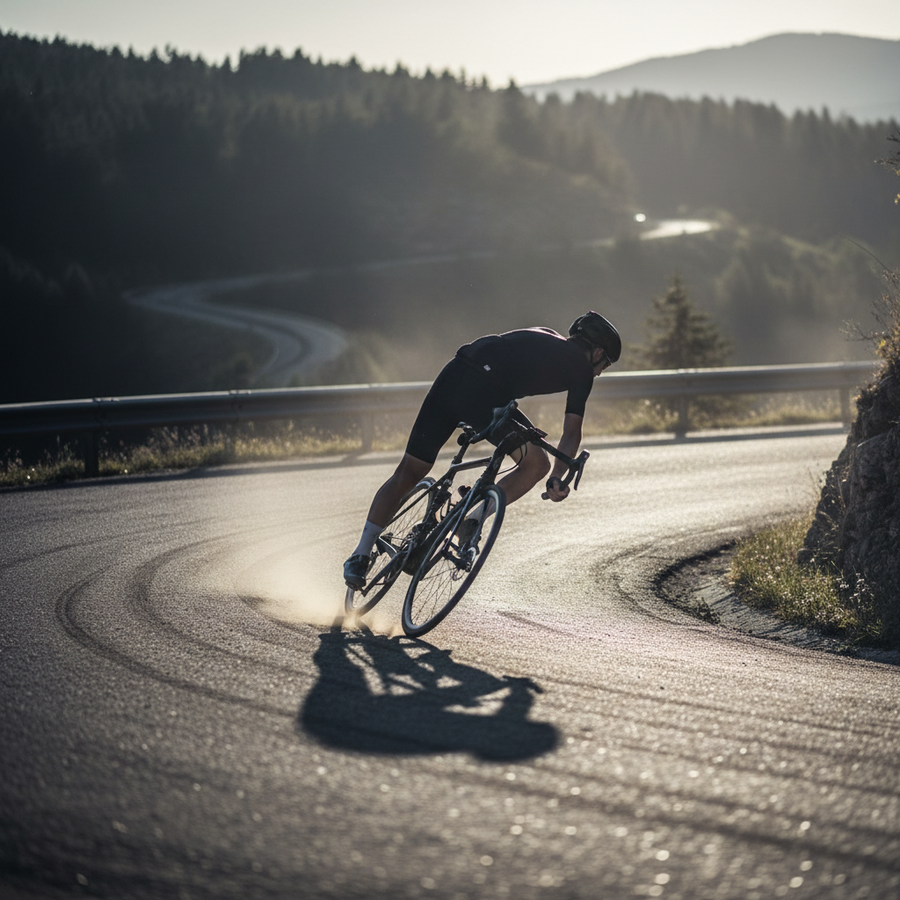
Cornering efficiently comes down to three things: looking through the corner, weighting the outside pedal, and entering at the right speed. Most riders look at the road immediately in front of their wheel when approaching a bend, which causes them to react late to what the corner is doing and makes smooth, confident cornering very difficult. The correct technique is to look through the apex of the corner toward the exit point. The eyes lead the body, and the body leads the bike. Fixing the gaze further ahead gives the brain more time to process the corner's shape and make the subtle adjustments in steering and weight distribution that produce a clean arc through the bend.

Weighting the outside pedal is the other fundamental that separates confident cornerers from hesitant ones. As the bike leans into the corner, the outside pedal should be at the bottom of the stroke with the rider's weight pressing down through it. This lowers the centre of gravity and increases the contact patch between the tyre and the road, which gives the bike more grip through the bend. The inside pedal should be raised to prevent it striking the road surface during the lean. Body position matters too: a slight drop of the inside shoulder and a gentle push of the inside knee outward toward the direction of the corner helps the bike track a smooth, predictable line without oversteering.

Braking Technique: When, How Much, and Which Lever

Braking is most effective when it is done before a corner rather than during it. A bike that is being braked while leaning through a bend is doing two things at once that partially conflict: the braking force is trying to slow the wheel's rotation while the lean is directing the tyre's grip into cornering. In dry conditions on clean road surfaces this is manageable, but in wet conditions or on gravel it dramatically increases the risk of the tyre losing grip. The correct approach is to complete the majority of braking in a straight line before the turn, enter the corner at the speed that allows a clean arc through it, and then begin pedalling again as the bike comes back upright toward the exit.

On road bikes with drop handlebars, the front brake lever is typically on the left and controls the front wheel, while the right lever controls the rear. The front brake generates significantly more stopping power than the rear because the bike's weight shifts forward during deceleration, loading the front tyre and increasing its grip. Using the front brake as the primary stopping tool with progressive, controlled pressure is more efficient than relying on the rear. Locking the rear wheel through excessive pressure produces a skid rather than stopping force and is less controllable. Feathering both brakes with more emphasis on the front, using smooth progressive pressure rather than sharp grabs, is the technique that produces the shortest, most controlled stopping distances. Riders who want to explore more technical content alongside every other area of cycling can use the cycling guide on Effort Does It, which covers gear guides, skills and techniques, rules and formats, training, and beginner content all in one place.

Descending: Body Position, Line Choice, and Speed Management

Descending quickly and safely begins with body position on the bike. The most stable and aerodynamic position for a straight descent is with the hands in the drops, elbows bent and relaxed, and the body low. Bent elbows act as a suspension system, absorbing small road vibrations and preventing them from translating into handlebar movement. Stiff, locked elbows on a fast descent transfer every bump directly into the steering, which creates instability at speed. The knees should be close to the top tube, and the weight distributed evenly between the saddle and the hands rather than being pressed too far forward or too far back.

Line choice on a descent is as important as speed management. On a road with no oncoming traffic, the most efficient line through a corner is a wide entry, a late apex, and a wide exit, which straightens the curve and allows a higher cornering speed for a given level of lean. On public roads with traffic, this line must be adapted to stay within the rider's lane, which usually means accepting a tighter arc and a lower entry speed. Reading the road ahead and identifying the surface quality, any loose material, drain covers, or camber changes before reaching them is a skill that improves with deliberate attention over many descents. Riders who want to deepen their technical knowledge across all areas of road cycling can explore the cycling skills & techniques guide on Effort Does It, where articles covering climbing, sprinting, group riding, and more are grouped together for easy exploration.

Putting It Together: Practising Technical Skills on the Road

Building confidence in cornering, braking, and descending requires deliberate practice in controlled conditions before applying it at pace on challenging terrain. A car park or quiet industrial estate provides a flat, safe environment to practise cornering technique at low speed, focusing on outside pedal weighting, looking through the exit, and maintaining a smooth arc without touching the brakes mid-corner. Repeating the same corner ten or fifteen times with full attention on technique builds the movement pattern far more effectively than hoping it develops during a group ride on fast roads.

For braking practice, find a straight stretch of quiet road and practise emergency stops from progressively higher speeds, focusing on progressive front brake pressure and a relaxed upper body. This builds the muscle memory and confidence needed to brake effectively when instinct might otherwise cause a rider to grab the levers sharply. Descending practice works best on familiar roads where the corners are known in advance, allowing the rider to focus entirely on body position and line rather than processing the unfamiliar environment at the same time. Starting on shorter, less technical descents and gradually moving to longer and more complex ones gives the brain and body the time they need to build the pattern recognition that confident descending depends on.

Summary

Cornering, braking, and descending each reward riders who understand the underlying mechanics and practise them deliberately rather than hoping confidence develops through general riding alone. Looking through corners, braking before the bend rather than during it, and maintaining a relaxed, low body position on descents are the three habits that produce the fastest and most durable improvement. Riders who are newer to cycling and want to build their core skills before tackling technical terrain can start with the beginner's guide on Effort Does It, which covers the foundational knowledge and skills every new rider needs before progressing to more advanced technique.