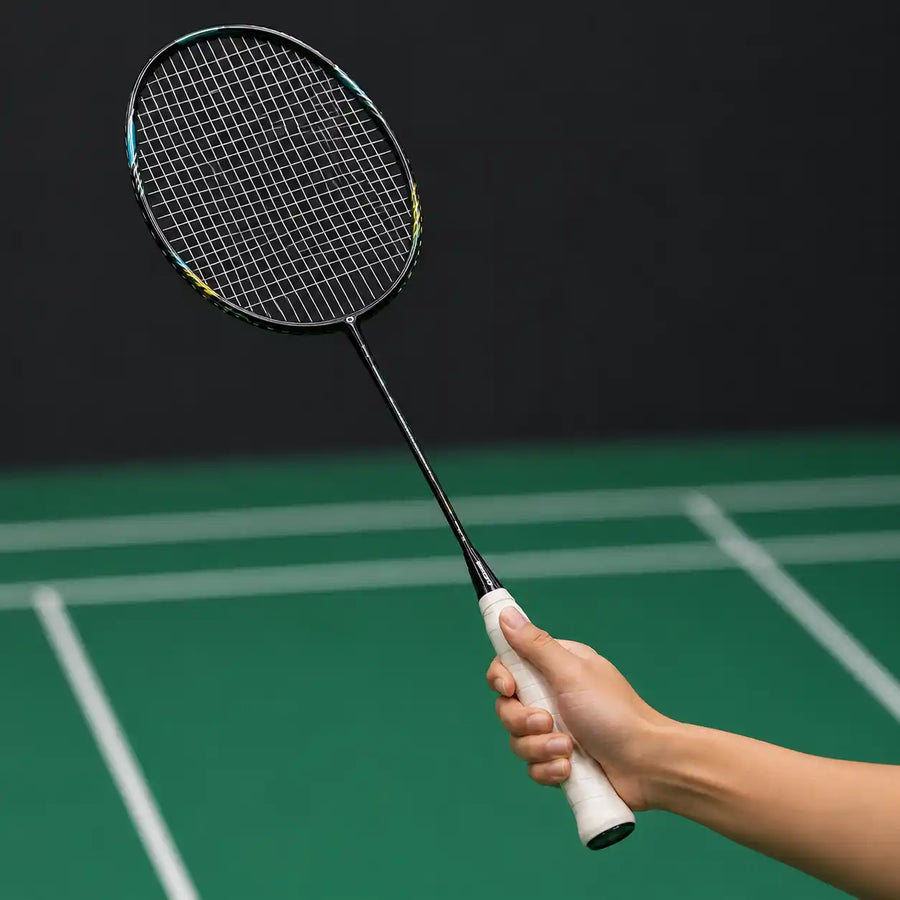
Use the forehand grip for most normal shots, especially when the shuttle is on the same side as your hitting hand. This includes many clears, drives, lifts, and some net shots. Use the backhand grip when the shuttle is on the opposite side and you do not have time to turn your body fully. In beginner games, this happens often at the backhand corner and near the net.
A common beginner mistake is using one grip for everything. That usually causes weak contact, poor direction, and a feeling that the shuttle is always just out of reach. Another mistake is turning the racket like a frying pan, which is sometimes called a panhandle grip. That grip may feel easy at first, but it reduces control and makes it harder to play proper strokes later.
Beginners also often hit the shuttle while the grip is too tight. This can make the shot feel forced and slow, especially on the backhand side. The problem is not only power. It is also timing. When the grip is stiff, the player cannot make quick adjustments at the last moment.
A useful example is a simple rally at school or in a casual club game. If the shuttle is pushed to the forehand side, the forehand grip helps the player answer naturally. If the shuttle is pushed to the backhand side, the backhand grip helps the player stay balanced and return the shot without panic. That is why grip is not just a technical detail. It is part of how a beginner reads and handles the game.