Badminton Training Reference

How to Move Faster and Reach More Shuttles in Badminton

Many badminton players feel fast in training but still struggle to cover the court quickly during real matches. The problem usually is not only top speed, but weak first-step timing, inefficient movement patterns, and slow recovery after each shot.

This article explains why that happens, how it affects court coverage, and what players can do to move faster with better badminton-specific movement.

How to Move Faster and Reach More Shuttles in Badminton

Why Speed Feels Slow

A player can have decent leg power and still look slow on court if movement is delayed or inefficient. In badminton, the first step matters more than long sprinting distance because most rallies are decided in short bursts across a very small space.

That is why many players say they are "fast in the gym" but not fast in games. Straight-line speed does not solve poor split-step timing, weak directional push-off, or slow decision-making. If the body starts late, the player loses time before speed even becomes useful.

Court speed is also affected by how quickly the player can stop and move again. A player who reaches the shuttle but cannot recover fast enough will still feel slow in the next shot. In badminton, moving fast is not just about getting there. It is about arriving balanced and ready for the next action.

Movement Quality Matters

Badminton movement depends on how well the body loads, pushes, brakes, and recovers. If the feet are too heavy, the split step is mistimed, or the hips do not stay stable, the player wastes force and takes extra steps.

The lower body must produce force quickly, but it also must absorb force cleanly. This is where many players struggle. They can push hard once, but they cannot repeat that action efficiently without drifting, crossing awkwardly, or losing balance.

Sports science often describes this as a combination of reactive strength, change of direction ability, and movement economy. In simpler terms, the player needs to react quickly, change direction cleanly, and waste as little motion as possible. Better movement quality often creates more real court speed than simply doing more running.

What It Looks Like in Play

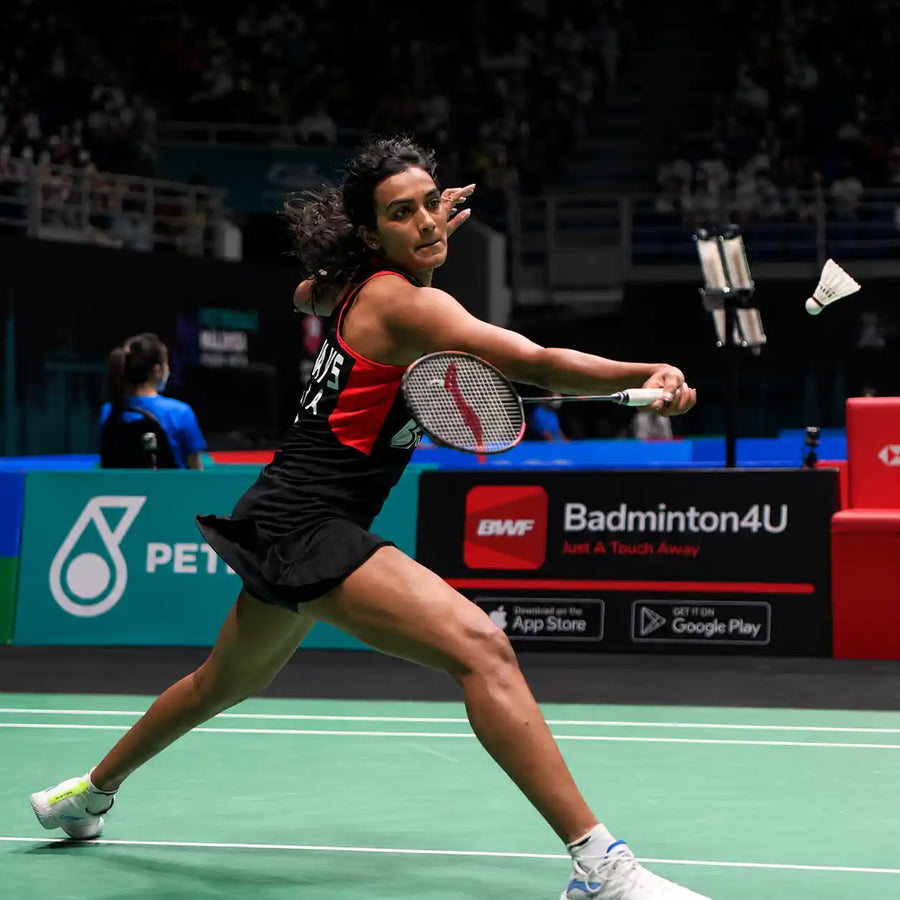
The problem becomes obvious during actual rallies. A player reaches the front court late and has to lift the shuttle instead of playing a tight net shot. They get stuck in the rear court and arrive off balance for a weak clear. They also struggle to recover after attacking, which opens space on the next shot.

This is especially clear when facing fast attackers or deceptive players. If the player waits too long to move, they lose ground immediately. If they move early but in the wrong direction, they still arrive late. If they reach the shuttle but need extra steps to stop, they lose the chance to play an aggressive reply.

One of the biggest signs is visible effort without real coverage. The player looks active, but the court still feels too big. That usually means the issue is not effort. It is movement efficiency, timing, and recovery speed.

Common Mistakes and Better Training

A common mistake is training only straight-line speed and expecting it to solve badminton movement. Another mistake is using random footwork patterns without linking them to real shot situations. These methods may build fitness, but they do not always improve how fast a player covers the court in rallies.

Players also often ignore the split step and the first push. Those two moments shape almost every movement in badminton. If they are late or sloppy, the rest of the rally starts from a disadvantage.

Better training should include reaction work, short directional bursts, clean braking, and recovery patterns that match real badminton. The goal is not just to move quickly once. The goal is to move, stop, and repeat without losing shape.
For a wider picture of movement development, the badminton guide is a useful starting point.

Strength work can help too, especially when it improves lower-body force production and control. That is why a good badminton training & conditioning plan should support on-court movement rather than sit apart from it.

Summary

Moving faster in badminton is usually about better timing, cleaner mechanics, and faster recovery, not just more running. Players who improve the first step and directional control often cover the court better even without becoming the fastest sprinter. For a simpler starting point, use the beginner's guide.