Swimming Training Learn

Swimming Conditioning Guide: Build Endurance, Speed, and Stroke Power

Swimmers who train regularly but struggle to improve often find that the missing piece is not effort but a clear conditioning framework that targets endurance, speed, and stroke power together. Without a structured approach to developing each of these qualities, progress in the water tends to plateau after initial gains.

This article explains how to build swimming-specific conditioning across all three physical areas, with practical guidance on how to organize training sessions for consistent improvement.
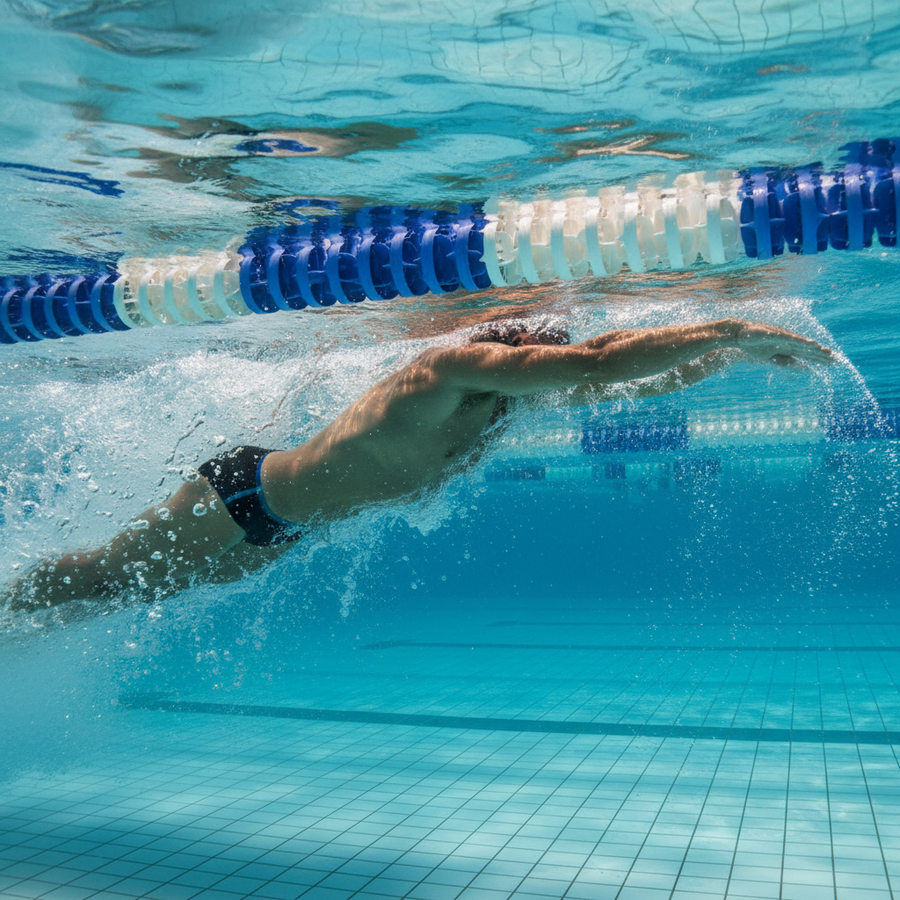
Swimming Conditioning Guide: Build Endurance, Speed, and Stroke Power

Why Conditioning in Swimming Requires Three Distinct Focuses

Swimming performance depends on three interconnected physical qualities. Endurance determines how long a swimmer can maintain effort before technique breaks down and speed drops off. Race-pace speed determines how fast a swimmer can move when it matters. Stroke power refers to the force generated with each pull and kick cycle. Developing all three in proportion creates the kind of well-rounded swimmer who holds their speed from start to finish.

Many swimmers focus heavily on distance per session, assuming that more metres in the water automatically builds the fitness they need. Aerobic base training is valuable, but it only develops one part of the picture. Speed sets and dryland strength work are equally important for developing the power and pace that separate competitive swimmers. A balanced conditioning program treats each quality as a separate training stimulus and plans sessions accordingly.

Aerobic Endurance Sets and How to Structure Them

Endurance in swimming is built through consistent aerobic work at moderate intensity. Long sets at 60 to 75 percent of maximum effort train the cardiovascular system and improve the body's ability to sustain stroke efficiency over extended distances. Pyramid sets, descending rest intervals, and threshold efforts at around 85 percent of maximum are effective ways to increase aerobic capacity while maintaining technical focus.

The key is not simply swimming more but ensuring that each aerobic session has a defined purpose. Easy recovery swims, steady-state aerobic sets, and longer threshold efforts each develop different aspects of endurance. Rotating between them throughout the training week keeps the body adapting while avoiding the repetitive strain that comes from doing the same session every day. Swimmers who want a complete overview of the sport can find everything from Gear Guides to Skills and Techniques, Rules and Formats, and the Beginner's Guide in the swimming guide.

Speed Training in the Pool: Sets That Develop Race Pace

Speed in swimming is developed through short, high-intensity efforts with sufficient rest between repetitions. Sprint sets of 25 to 50 metres at maximum effort, timed descending sets, and race-pace intervals all train the fast-twitch muscle fibres and anaerobic energy systems that drive sprinting performance. These sessions are typically short in total distance but demanding in intensity.

A common mistake is cutting rest intervals too short during speed work in the belief that fatigue itself is the training stimulus. During speed sessions, the opposite is true. Full recovery between efforts allows each repetition to be performed at genuine race pace, which is what trains the neuromuscular system to move faster. Speed work performed in a fatigued state typically produces slower times and reinforces inefficient technique. Swimmers looking for more structured training content, recovery protocols, and performance development articles can explore the swimming training and conditioning guide.

Building Stroke Power With Dryland and In-Water Strength Work

Stroke power is developed both in the water and through targeted dryland training. In the pool, resistance tools such as paddles, bands, and drag socks increase the force required with each stroke, building the specific strength used during racing. Pulling sets with a buoy isolate the upper body and allow swimmers to focus on catch depth, pull path, and finish position without the distraction of kick mechanics.

Dryland sessions should target the muscles most involved in swimming: the latissimus dorsi, rotator cuff, core, and hip flexors. Pull-ups, lat pulldowns, cable rows, and rotational core exercises all develop the pulling strength that translates directly to stroke power in the water. Two dryland sessions per week during the preparation phase is a realistic starting point. As competition approaches, volume can be reduced while maintaining intensity to preserve the strength gains made during earlier training blocks.

Summary

Building swimming-specific conditioning means developing endurance, race-pace speed, and stroke power as distinct but connected qualities within a structured training plan. Progress comes from consistency across all three rather than focusing heavily on any single aspect. Swimmers who are new to training or want to reinforce technique and foundational skills before progressing can find beginner-friendly articles in the beginner's guide, which covers the basics needed to swim with confidence and build from there.