Table tennis Techniques Learn

Table Tennis Footwork Drills to Improve Speed and Balance

Readers miss too many balls when footwork starts late, because a slow or unbalanced stance leaves no time to reach the right position before contact.

This guide shows how to build footwork that gets the body ready for every rally ball.
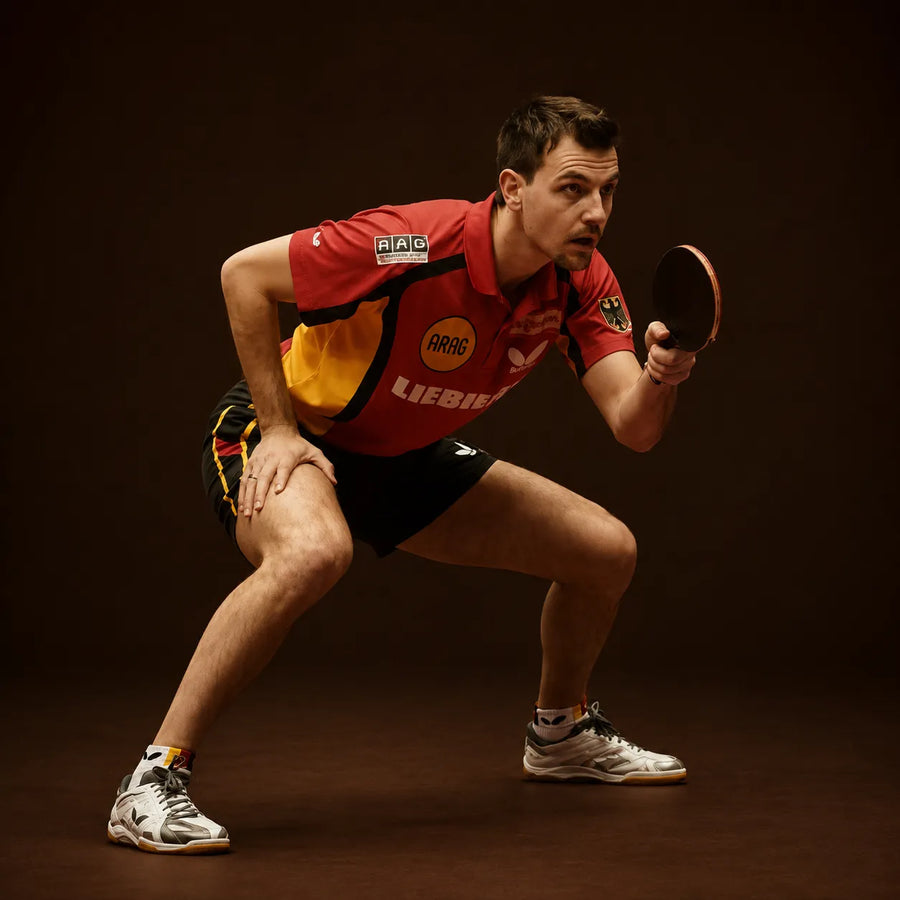
Table Tennis Footwork Drills to Improve Speed and Balance

The Ready Position | The Foundation of Fast Footwork

Fast footwork begins in the ready position, where the feet stay wider than shoulder width, the knees stay bent, and the weight stays on the balls of the feet. That stance keeps the body spring-loaded so movement can start without a preparatory step. The table tennis guide connects footwork to the wider picture of how movement underpins every part of the game.

The Side-to-Side Shuffle | The Most Important Footwork Drill

The side-to-side shuffle covers most rally movement by pushing off the outside foot and keeping the body square to the table. Crossing the legs breaks balance, while a clean shuffle keeps the player stable enough to strike from either side.

The Pivot Step | Setting Up Powerful Forehand Attacks

Pivot footwork lets a right-hander move the left foot backward and outward to open the hips for a stronger forehand from the backhand corner. The motion creates room for rotation and turns a defensive position into an attacking one without repositioning the whole body.

The table tennis skills and techniques guide covers footwork drills and movement patterns in more detail.

What to Look for in a Table Tennis Bag for Practice Sessions

A good practice bag keeps the bat, towel, and training balls separated so repetition stays simple instead of messy. EDIT designed its table tennis bag to carry the essentials without damage, so movement work stays the focus of practice.

Summary

Table tennis footwork starts with the feet, not the stroke, because position decides whether the shot is possible. The beginner's guide helps players build the base.