Badminton Training Reference

Why Does Your Knee Hurt After Playing Badminton?

Knee pain after badminton is usually a sign that the joint is taking more stress than it can handle, especially during lunges, landing, braking, and repeated direction changes. It often shows up after hard sessions, long rallies, or match play because badminton puts a lot of load through the knee in a short amount of time.

This article explains why that pain happens, how it affects movement and performance, and what players can do to reduce it without giving up badminton.
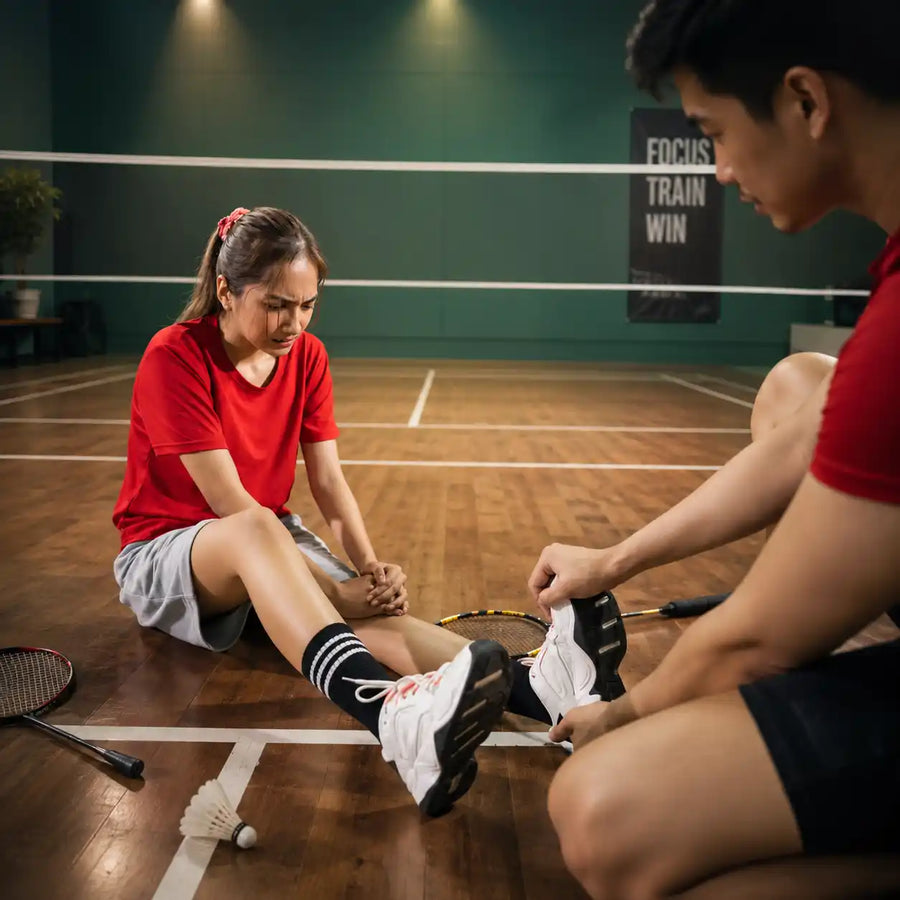
Why Does Your Knee Hurt After Playing Badminton?

Why the Knee Starts Hurting

Badminton asks the knee to absorb force over and over again. Every lunge, split step, jump, stop, and push-off creates stress through the joint and surrounding tissues. If the player repeats those actions with poor mechanics or too much volume, pain can start to build.

Many players first notice the pain after playing, not during play. That is because the body can often hide a problem while adrenaline and movement are still high. Once the session ends, the knee becomes stiff, sore, or swollen. Some players feel pain at the front of the knee, while others feel it around the tendon, sides, or below the kneecap.

This pain can reduce confidence quickly. A player may stop lunging fully, avoid jumping, or hesitate when changing direction. That leads to weaker movement, slower rallies, and more strain on other body parts.

Movement, Load, and Control

The knee does not work alone. It depends on the hips, ankles, feet, and core to share the load properly. When those areas do not control movement well, the knee often takes too much force. That can happen if the player lands stiffly, collapses inward on the lunge, or cannot brake smoothly.

A lot of knee pain in badminton is linked to repeated load without enough recovery. The issue is not always one bad movement. More often, it is a pattern of training too much, moving too hard, or returning too soon after soreness. If the same stress is repeated before the tissue has adapted, the pain becomes more regular.

Coaches often look at knee pain as both a strength and a movement problem. The leg needs enough capacity to handle force, but the player also needs cleaner mechanics. Better hip control, stronger single-leg support, and better landing positions can reduce unnecessary knee stress.

When It Shows Up in Badminton

Knee pain often appears during lunges, especially if the player drives the knee too far forward without enough control from the hips and ankle. It can also show up after repeated rear court movement, jump smashes, or long rallies where the legs stay under load for a long time.

Some players notice pain when they change direction quickly. Others feel it most after training sessions with lots of footwork or multishuttle drills. In doubles, the problem may appear during repeated front court interceptions and quick recoveries. In singles, it often shows up when the player has to cover large areas and lunge repeatedly from different angles.

This is why resting for one day sometimes helps but does not solve the issue. The player goes back to the same movement pattern, the same volume, and the same load. The knee gets stressed again and the pain returns.

For a wider view of performance and movement quality, the badminton guide is a helpful starting point.

Common Mistakes and Better Fixes

A common mistake is assuming all knee pain means the player should stop moving completely. Rest may help a flare-up, but too much rest can also make the leg weaker and less tolerant of badminton load. Another mistake is only stretching the leg and expecting the pain to disappear. Flexibility alone does not solve a load problem.

Players also often ignore how they lunge and land. A rushed lunge, poor balance, or weak push-off can keep irritating the knee even if the pain feels mild at first. Strength work helps, but it needs to be specific. The best approach usually includes controlled single-leg strength, better braking, and gradual return to full court load.

Badminton-specific conditioning should support the knee rather than overload it. That is where a proper badminton training & conditioning plan can help by improving tissue capacity, movement control, and recovery between sessions.

Summary


Knee pain after badminton usually comes from repeated load, poor movement control, or both, and it often gets worse during lunges, braking, and long rallies. Better movement mechanics, smarter loading, and gradual strengthening help the leg absorb force more effectively, reducing pain while protecting performance. For a simpler starting point, use the beginner's guide.