Hockey Gear Purchase

How to Buy Hockey Gear: Sizing, Fit Profiles, and Safety Gaps

Many new hockey players feel pressure to spend heavily on gear before they have even established whether they enjoy the sport, and the sheer range of products marketed at beginners makes it genuinely difficult to separate what is necessary from what is not. Starting with the wrong items, or poorly fitted gear, often leads to wasted money, discomfort on the ice, and gaps in protection that expose players to preventable injury.

This article walks through how to buy hockey gear correctly, covering the sizing systems used across different equipment categories, the fit profiles that suit different body types and playing positions, and the safety gaps that leave too many new players underprepared.
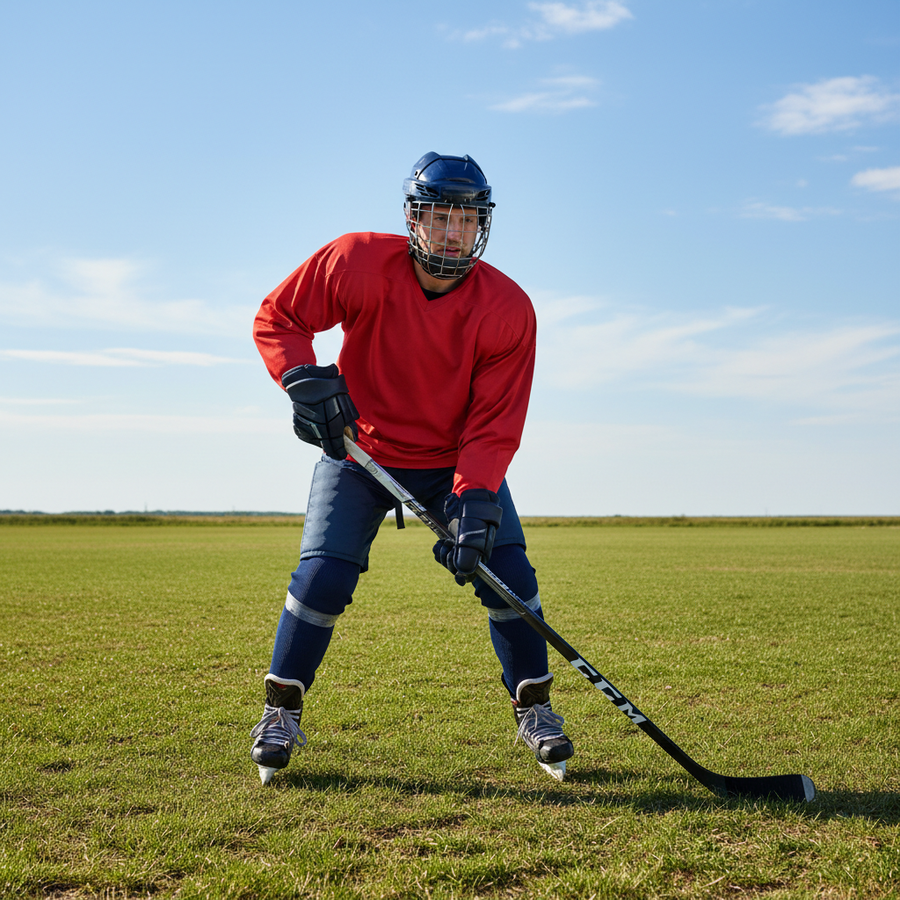
How to Buy Hockey Gear: Sizing, Fit Profiles, and Safety Gaps

Why Sizing and Fit Matter More Than Brand or Budget

Hockey gear is sold across a wide range of price points, and it is tempting to assume that spending more automatically means better protection or performance. In practice, a mid-range piece of equipment that fits correctly outperforms an expensive item that does not. Shin pads that ride too high leave the ankle exposed. Shoulder pads with the wrong yoke width leave the collarbone uncovered. A helmet that sits too loosely provides a fraction of the protection it is rated for.

The reason sizing is particularly complex in hockey is that different equipment categories use different measurement conventions. Skates are sized down from shoe size by one to one and a half sizes but vary by brand and fit profile. Sticks are sized by the player's height and flex rating. Protective gear is sized by body measurements but labeled inconsistently across manufacturers, meaning a medium in one brand can correspond to a small or large in another.

A thorough hockey gear guide explains how these fundamentals fit into a broader picture of what the sport involves at each stage of development.

How to Size the Core Pieces of Hockey Equipment

Skates are the most critical and most commonly misfitted piece of hockey equipment. The general rule is to go one to one and a half sizes smaller than your street shoe size, but this varies between brands. The skate should feel snug across the foot with no heel lift when laced and no toe pressing into the cap. Heat moulding, offered at most hockey shops, significantly improves fit after purchase and is worth doing with any new pair.

Helmets are sized by head circumference, measured just above the ears and across the forehead. The helmet should sit level, cover the forehead two finger widths above the eyebrows, and not rock forward, backward, or side to side when shaken. The cage or visor should attach without gaps. HECC or CSA certification is required for league play in most hockey associations.

Shin pads are measured from the centre of the kneecap to the top of the skate boot. The pad should cover the knee fully and run down to meet the skate without overlap or gap. Shoulder pads are sized by chest circumference and should cover the collarbone, shoulder tip, and upper arm without restricting arm movement. Gloves are sized from the base of the palm to the tip of the middle finger, doubled, and the cuff should meet the shoulder pad sleeve.

Sticks are cut to height by standing in skates and holding the stick vertically: the shaft should reach between the chin and nose for forwards and between the nose and eyebrows for defenders. Flex rating should be roughly half the player's body weight in pounds as a starting point for adults.

Fit Profiles and How They Affect Your Choice

Most major hockey equipment brands offer two or three fit profiles within each product category. A tapered fit is cut closer to the body, suits lean or slender builds, and offers a lower-profile appearance. A regular or anatomical fit suits average builds and provides a balance between protection coverage and freedom of movement. A wide fit accommodates broader or more muscular body types and typically offers more padding volume.

Position also influences fit preferences. Defenders often favour slightly bulkier shoulder pads and higher-volume pants for the level of physical contact their role involves. Forwards who prioritise mobility tend toward lighter, more form-fitting protective gear. Goaltenders use an entirely separate sizing system and equipment category that does not correspond to skater measurements.

When trying gear in a shop, always replicate game conditions as closely as possible. Wear the base layer you intend to play in, try skates with hockey socks, and move through relevant actions: crouch into a hockey stance, extend both arms, simulate a shot. Equipment that feels comfortable standing still but restricts movement during play will create problems from the first session.

Safety Gaps That New Hockey Players Commonly Miss

Neck protection is the most common safety gap among new hockey players and recreational adult leagues. A properly fitted neck guard or neck-protecting collar significantly reduces the risk of laceration from skate blades, which is a rare but serious injury. Many entry-level kit lists and equipment packages do not include neck protection as a default item, and players often do not purchase it separately.

Mouthguards are required in most youth leagues but optional in adult recreational play, and the majority of adult players who choose to skip them are unaware that dental injuries are one of the most statistically common hockey injuries at all levels. A properly fitted mouthguard also provides some protection against concussion by absorbing jaw impact.

Jockstraps and pelvic protection for male players, and pelvic girdles or Jill straps for female players, are sometimes absent from beginner kits assembled from gear packages or secondhand purchases. This is one category where absence of protection carries an obvious and immediate risk, and it should be confirmed before any player steps on the ice.

Finally, ill-fitting gloves are a common but underappreciated safety gap. Gloves that are too short expose the wrist between the glove cuff and sleeve. Gloves that are too large reduce puck feel and stick control, which indirectly increases the risk of uncontrolled stick movements during play. Correct glove fit is as much a safety consideration as a performance one.

For a full breakdown of every piece of equipment and how the pieces work together on the ice, the hockey guide covers everything a new player needs to know before and after their first purchase.

Summary

Buying hockey gear correctly means understanding the sizing conventions for each equipment category, choosing a fit profile suited to your body type and playing position, and identifying the protective gaps that standard starter kits often leave unaddressed. The difference between well-fitted gear and poorly-fitted gear is most apparent the first time something goes wrong on the ice, and the cost of addressing fit at the point of purchase is almost always lower than addressing it after a preventable injury. For a broader overview of everything involved in getting started, the beginner's hockey guide covers the foundation a new player needs to get started confidently.

EDIT Gear for Hockey

Gear Coming Soon