Hockey Rules Reference

Ice Hockey : A Beginner's Guide to On-Ice Rules, Offsides, and Penalties

Ice hockey moves fast, and for someone watching for the first time, a significant portion of what happens on the ice can seem arbitrary. Play stops without an obvious reason, a goal gets waved off after the referee consults a review, and players disappear into a box along the boards for stretches of time that seem to follow no obvious logic. None of this is arbitrary, but the rules that govern it are not always explained clearly to new fans or players.

This guide covers the core on-ice rules of ice hockey, including how offsides and icing work, what different penalties mean, and how the structure of the game determines what is and is not allowed during play.
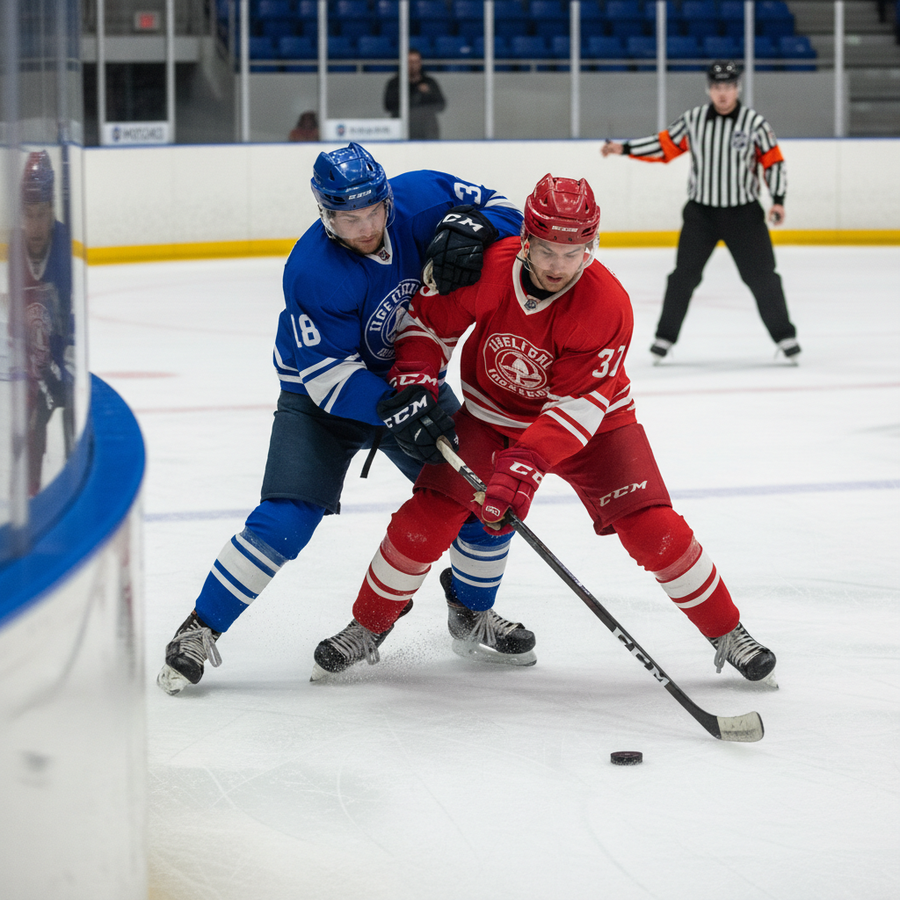
Ice Hockey : A Beginner's Guide to On-Ice Rules, Offsides, and Penalties

How a Game of Ice Hockey Is Structured

A standard ice hockey game is played over three periods of twenty minutes each. The clock stops whenever the referee blows the whistle to end play, which means twenty minutes of game time can take considerably longer in real time. Between periods, teams switch ends of the ice. If the score is tied at the end of regulation in playoff hockey, overtime periods are played until one team scores. In regular season play, a shorter overtime period is followed by a shootout if no goal is scored.

Each team fields six players at a time: three forwards, two defenders, and a goaltender. Substitutions can be made at any time during play, and teams change their lines frequently, often every forty-five to sixty seconds of active play. The goaltender is the only player with specific positional restrictions and the only one who can legally use their hands to catch or redirect the puck, within defined limits around the goal crease.

A complete hockey rules and formats guide covers how these structural elements fit into the broader framework of how the sport is organised at different levels.

Offsides and Icing Explained

Offsides is called when an attacking player enters the offensive zone, defined as the area beyond the far blue line, before the puck crosses that same line. The rule exists to prevent players from camping in the offensive zone waiting for long passes, which would undermine the back-and-forth nature of the game. When offsides is called, play stops and a faceoff takes place in the neutral zone. The key point is that it is the position of the player's skates relative to the blue line, not their body position, that determines whether they are onside.

Icing is called when a player shoots or dumps the puck from their own half of the ice all the way past the opposing goal line without it being touched. This rule prevents teams from simply clearing the puck the length of the ice to relieve pressure, which would make the game significantly more defensive. When icing is called, play stops and a faceoff is held in the defensive zone of the team that iced the puck. Teams that are killing a penalty are exempt from icing, which gives the short-handed team a tactical tool.

Both rules are among the most frequently misunderstood aspects of ice hockey for new viewers because they involve positional judgements that happen quickly and are not always obvious from a spectator's angle. Linesmen, rather than referees, are responsible for calling offsides and icing.

For a thorough explanation of both rules with examples from different game situations, the hockey rules and formats guide breaks down each scenario clearly.

Penalties and the Power Play

Penalties in ice hockey send the offending player to the penalty box for a set duration, during which their team plays short-handed. A minor penalty lasts two minutes and ends early if the opposing team scores during that time. A double minor, typically called for high-sticking that draws blood, lasts four minutes but is also cut short by a goal. A major penalty lasts five minutes and does not end early if the opposing team scores.

Common minor penalties include hooking, holding, tripping, cross-checking, interference, and roughing. High-sticking is called when a player makes contact with an opponent using the stick above the height of the shoulders. Slashing involves swinging the stick at an opponent. Boarding penalises a player who checks an opponent violently into the boards from behind or from a position where the opponent cannot protect themselves.

When one team has a player in the penalty box, the opposing team has a power play: a numerical advantage that typically results in more time in the offensive zone and higher quality scoring chances. Teams with a player advantage use specific formations designed to move the puck quickly and create shooting lanes, while the short-handed team uses aggressive positioning to pressure the puck carrier and attempt to kill the clock or create a short-handed scoring chance.

Goals, Reviews, and What Makes a Score Count

A goal is scored when the puck fully crosses the goal line between the posts and beneath the crossbar. Goals are confirmed by a video review system in professional leagues, which checks for puck position, goaltender interference, and whether the play should have been stopped for a preceding infraction. A goal is disallowed if an attacking player was in the crease before the puck and made contact with the goaltender, or if the puck was directed in with a distinct kicking motion.

Hand passes are illegal in all three zones in most levels of the game. A player may bat the puck with their hand in their own defensive zone but cannot pass it to a teammate using an open hand. Pucks that are deliberately covered or held by a skater who is not the goaltender result in a penalty for delay of game. The goaltender can cover the puck to stop play but only within a defined area around the net.

Penalty shots are awarded when a player with a clear breakaway opportunity is fouled from behind with no other defenders between them and the goaltender. The player takes the shot one on one against the goalie from centre ice with no other players involved. Penalty shots are relatively rare in game play but carry significant momentum implications when they occur.

Getting a clear picture of all these rules together makes watching the game considerably more rewarding, as the stoppages and decisions that can seem confusing at first begin to reflect a coherent set of principles about fair play and competitive balance.

Summary

Ice hockey's core rules cover a lot of ground but follow a consistent logic once the structure of the game is understood. Offsides and icing manage how teams use the ice surface. Penalties create temporary imbalances that teams must either exploit or survive. Goals are confirmed by a system designed to catch the specific ways a puck can be directed illegally into the net. For new players and fans who want to go deeper, the beginner's hockey guide covers the foundation needed to follow and enjoy the game from the first session onward.