Athletics Techniques Learn

How to Improve Running Form for Better Speed and Efficiency

Most runners develop their form through habit rather than instruction, which means small inefficiencies in posture, arm drive, and foot strike quietly accumulate and limit both speed and endurance without the runner ever identifying the cause. Correcting running form feels awkward at first precisely because it disrupts patterns the body has repeated thousands of times, and without understanding what to change and why, most runners revert to old habits within a few sessions.

This article explains the key components of efficient running form, what each one contributes to speed and economy, and how to make lasting improvements that carry over from training into race situations.
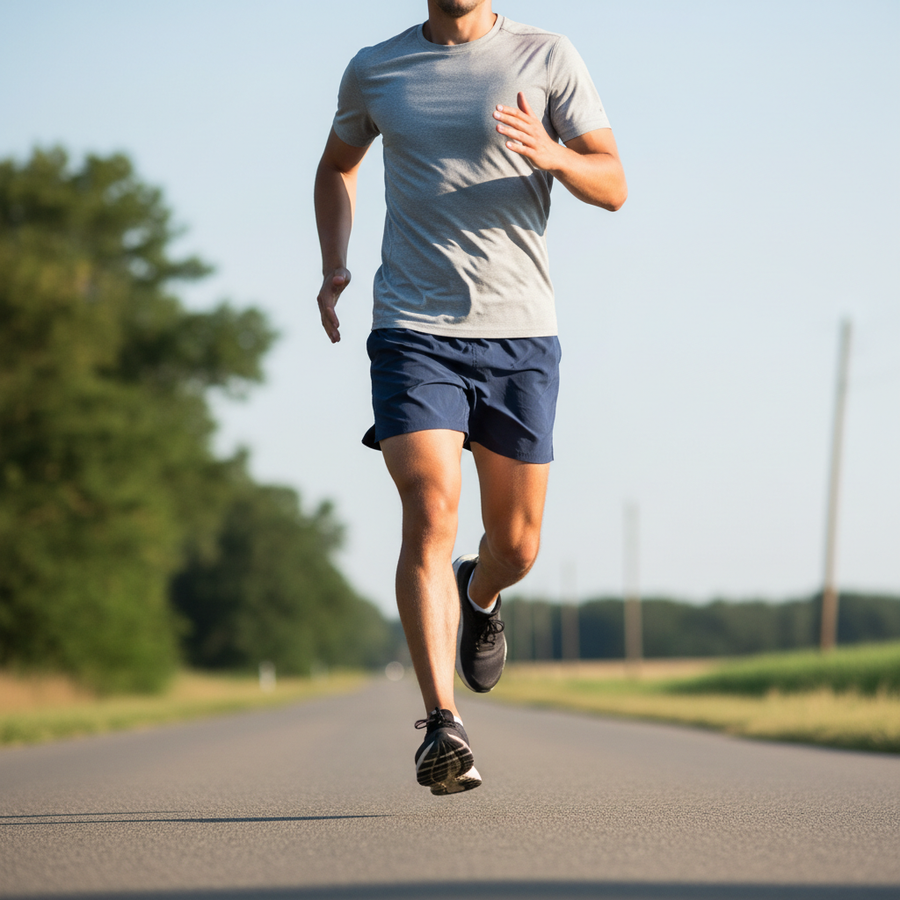
How to Improve Running Form for Better Speed and Efficiency

Posture and Head Position: The Foundation of Efficient Running

Running posture begins with the head. The head accounts for roughly eight percent of total body weight, and where it sits relative to the spine directly influences the alignment of everything below it. A runner whose head drops forward or whose chin lifts upward creates a chain of compensations through the neck, shoulders, and upper back that increases tension, reduces arm efficiency, and shifts the body's centre of mass away from its optimal position. The correct head position places the gaze forward at a natural horizon line, with the chin level and the back of the neck long rather than compressed.

The torso should be upright with a slight forward lean from the ankles rather than the waist. Leaning from the waist, which is one of the most widespread postural errors in recreational running, compresses the hip flexors, shortens the stride, and forces the glutes to work from a mechanically disadvantaged position. A lean from the ankles keeps the entire body as a single unit angled slightly into the direction of travel, which allows gravity to assist forward momentum rather than working against it. Shoulder tension is another common postural problem: runners who hold their shoulders high and tight restrict breathing depth and waste energy in muscles that should remain relaxed throughout the run. A periodic drop and roll of the shoulders during longer runs is a practical reset that most coaches recommend.

Arm Drive, Cadence, and Their Role in Running Economy

Arm drive is one of the most underappreciated contributors to running speed and efficiency. The arms and legs are neurologically linked during running through a cross-pattern reflex, which means the arm swing directly influences the rhythm and power of the leg drive below. A slow, loose arm swing produces a slow leg turnover. A compact, controlled arm drive with a strong backward emphasis actively pulls the legs through faster. The elbows should be bent at approximately 90 degrees, with the hands relaxed, not clenched, and the swing moving front to back along the body's line of travel rather than crossing the midline. Crossing the arms in front of the body rotates the torso and wastes energy in a direction that does not contribute to forward movement.

Cadence, measured in steps per minute, is the other major variable in running economy. A cadence that is too low typically indicates overstriding, where the foot lands well ahead of the body's centre of mass and creates a braking force with every step. Increasing cadence shortens the stride slightly and brings the foot contact point closer to under the hips, which reduces braking and increases the efficiency of the push-off phase. Most athletics coaches and exercise scientists point to a range of 170 to 180 steps per minute as an effective target for trained runners across a range of paces, though the optimal cadence varies by individual. Runners who want to explore how form work fits into the wider world of athletics can find every content category, from training and techniques to gear and beginner guides, through the athletics guide on Effort Does It.

Foot Strike, Ground Contact, and Forward Propulsion

Foot strike pattern, meaning where on the foot initial ground contact occurs, has received considerable attention in running research and coaching over the past two decades. Heel striking, where the heel makes first contact ahead of the body, is the most common pattern among recreational runners and is directly associated with overstriding. Midfoot striking, where contact occurs closer to the ball of the foot and beneath the hips, is generally associated with more efficient force transmission and reduced impact loading through the knee. Forefoot striking, where the ball of the foot makes first contact, is used by sprinters and some distance runners but can increase load on the calf and Achilles tendon if transitioned to too quickly.

Ground contact time, the duration each foot spends on the ground per stride, is a meaningful indicator of running efficiency. Shorter ground contact time generally corresponds to faster, more elastic running because less time on the ground means less time decelerating. Elite distance runners typically have ground contact times well below 200 milliseconds per foot strike, while recreational runners often spend significantly longer. Developing a more powerful and rapid push-off through the ankle and calf, combined with higher cadence, reduces ground contact time progressively over weeks of consistent training. Runners looking for more detailed articles on specific technical aspects of athletics performance can explore the athletics skills & techniques guide on Effort Does It, which covers drills, form cues, event-specific technique, and performance improvement across track and field.

How to Change Running Form Without Breaking Your Training

The most common mistake runners make when trying to change their form is attempting to change too many things at once during full training runs. The nervous system changes movement patterns through repetition of the new pattern, and trying to consciously monitor posture, arm drive, cadence, and foot strike simultaneously during a hard training session overwhelms attention and prevents any single element from being internalised. A more effective approach is to isolate one element per session using short drills and strides where that element is the only focus, before attempting to integrate it into regular running.

Running drills such as high knees, A-skips, B-skips, and bounding are used by coaches at all levels to reinforce specific mechanical patterns in an exaggerated form that the nervous system can more easily encode. High knees reinforce knee lift and hip flexor engagement. A-skips develop the pawing action of the foot pulling back toward the ground before contact. Bounding develops hip extension power and the elastic qualities of the calf and Achilles. Adding four to six drills of 20 to 30 metres each before two or three runs per week, followed by four to six relaxed strides where the drill pattern is blended into actual running, is a simple and effective structure for progressive form improvement over a training block of six to twelve weeks.

Summary

Improving running form produces gains in both speed and efficiency that training volume alone cannot replicate, and the most sustainable way to change it is to isolate one element at a time using drills and strides before integrating the new pattern into full training runs. Posture, arm drive, cadence, and foot strike each contribute independently to running economy, and addressing any one of them with deliberate attention will produce noticeable results within a few weeks of consistent practice. Runners who are newer to athletics and want to build their foundation before focusing on technical refinement can start with the beginner's guide on Effort Does It, which covers the essential knowledge and skills for anyone getting started in the sport.