Hockey Training Learn

Easy Hockey Drills for Better Speed and Agility

Speed and agility are two of the most important physical qualities in hockey, yet many players train them in isolation from the sport itself, which limits how much improvement transfers to actual match performance. Without drills that replicate the demands of hockey movement, time spent on fitness work can feel productive while delivering limited results on the pitch.

This article covers practical speed and agility drills that hockey players can use to move faster, change direction more effectively, and perform better when it matters most.
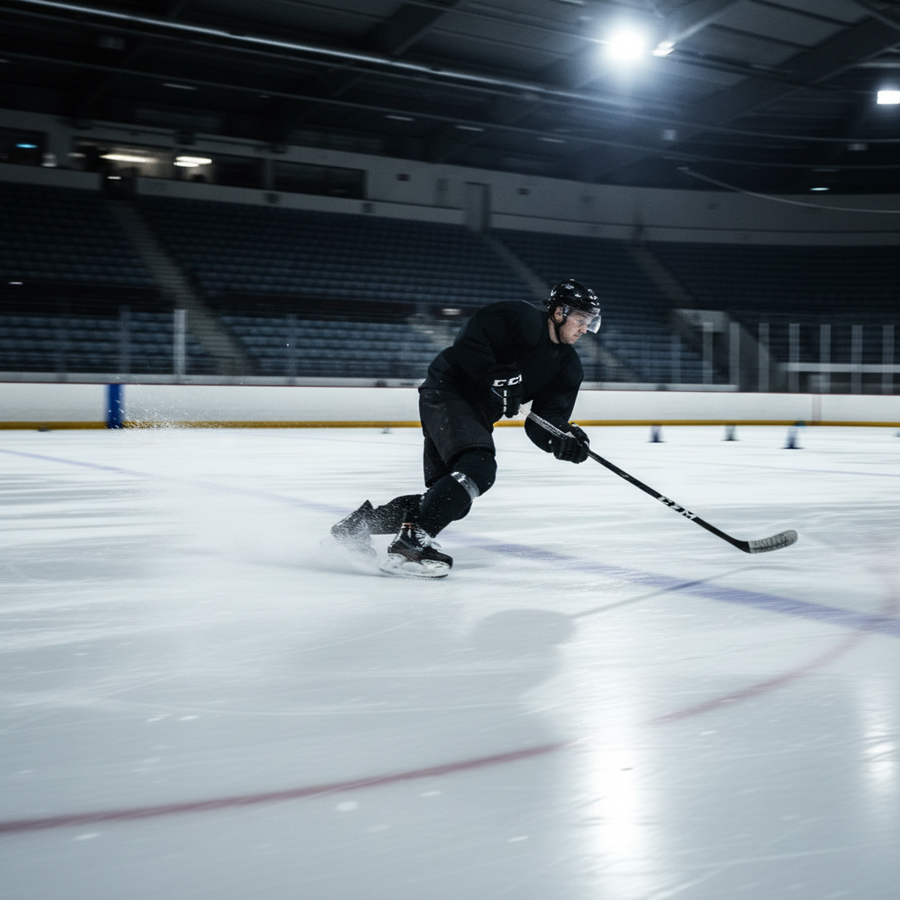
Easy Hockey Drills for Better Speed and Agility

Why Speed and Agility Training Matters in Hockey

Field hockey is a sport defined by short, explosive bursts of speed, rapid changes of direction, and the ability to accelerate repeatedly across a 91-metre pitch over 60 minutes of play. Research from performance analysts working with international hockey programmes consistently identifies acceleration over short distances of 5 to 20 metres as more relevant to match performance than top-end speed alone. Most actions in hockey occur over distances where a player never reaches maximum velocity, which means the ability to accelerate quickly from a standing or low-speed start is the primary speed quality to develop.

Agility in hockey refers specifically to the ability to change direction quickly while maintaining control of the body, and ideally the ball. It differs from speed in that it involves deceleration, reorientation, and re-acceleration, all in rapid sequence. A player who can accelerate well in a straight line but struggles to stop and redirect is limited in their effectiveness on the pitch, particularly when pressing, recovering defensively, or making runs into space that require sudden changes of angle. Developing both qualities together, rather than treating them as separate training goals, produces the most meaningful improvement in match performance.

Drills to Develop Straight-Line Speed for Hockey

Acceleration drills for hockey should focus on short distances and explosive starting positions. Falling starts, where the player leans forward from an upright position until balance is lost and then drives into a sprint, train the body to generate forward momentum rapidly from a low angle. This replicates the postural demands of accelerating from a static defensive position or a set piece restart. Resistance band sprints, where a partner or anchor provides light resistance during the first few metres of a sprint, develop the hip extension and ground contact mechanics needed for powerful acceleration.

The 10-metre sprint with a 5-metre flying start is a simple drill that trains both initial acceleration and the transition into higher speed running. Set two cones 10 metres apart with a third cone 5 metres before the first. The player accelerates from the third cone and aims to be at maximum speed by the time they pass the first cone, then maintains that speed through to the second. Pairing speed drills with ball-in-hand variations, where the player dribbles through the sprint zone, directly improves sport-specific speed. Separating fitness from skill in every training session is a missed opportunity in hockey development. For a broader view of how physical preparation fits into hockey as a sport, the hockey guide on Effort Does It is a useful reference.

Agility Drills That Replicate Hockey Movement

The T-drill is one of the most widely used agility drills across team sports and translates well to hockey. Four cones are arranged in a T-shape: one at the base, one directly ahead, and one each to the left and right of the top cone. The player sprints forward to the top cone, sidesteps to one side, sidesteps across to the other, then sidesteps back to the centre before backpedalling to the start. The drill trains lateral movement, backpedalling mechanics, and the transitions between them, all of which occur frequently in hockey defensive play and midfield pressing.

The 5-10-5 shuttle, also called the pro agility drill, places three cones in a line five metres apart. The player starts at the middle cone, sprints five metres to one end, touches the line, sprints ten metres to the opposite end, touches that line, then sprints five metres back through the start. This drill develops the deceleration and re-acceleration mechanics that are central to pressing and recovery runs in hockey. Reactive agility drills, where the change of direction is triggered by a coach's signal or a ball movement rather than a fixed course, more closely replicate match conditions and should be included once the basic patterns are established. Understanding how these physical demands connect to the formal structure of the game is covered in the rules & formats section on Effort Does It.

How to Structure Speed and Agility Work Into Your Training Week

Speed and agility training produces the best results when it is placed at the beginning of a session, after a thorough warm-up but before any fatigue has accumulated from other training. Performing sprint and agility drills on tired legs reduces the quality of movement and limits the neurological adaptation that makes this type of training effective. Two to three dedicated speed and agility sessions per week is sufficient for most club-level hockey players, with each session lasting between 20 and 35 minutes of actual work time excluding warm-up.

Rest periods between speed and agility reps should be long enough to allow near-full recovery, typically a work-to-rest ratio of 1:4 to 1:6 for sprint-based drills. Cutting rest short in the belief that it adds a conditioning benefit undermines the quality of the speed work itself. Conditioning is better developed through separate aerobic and high-intensity interval work rather than by compressing rest periods in speed sessions. Progressing drills over time, by reducing ground contact time, adding reactive decision-making elements, or incorporating a stick and ball, ensures that adaptation continues rather than plateauing once the basic patterns become familiar.

Summary

Speed and agility development in hockey requires drills that match the short, explosive, and multidirectional demands of the sport rather than generic fitness work disconnected from the game. Structuring these sessions at the start of training, with adequate rest between reps, ensures the quality of movement that produces real physical adaptation. Players new to structured athletic training will also find useful context in the beginner's guide on Effort Does It.