Hockey Training Learn

Simple Strength Training for Hockey Players

Strength training is often overlooked by hockey players who focus almost entirely on technical skill and aerobic fitness, yet the physical demands of the sport place considerable stress on the lower body, core, and upper body in ways that aerobic conditioning alone does not address. Without a basic level of functional strength, players are more prone to injury, tire more quickly under physical pressure, and lack the power needed for hitting, tackling, and winning aerial contests.

This article explains how hockey players can approach strength training simply and effectively, covering the key movement patterns, exercises, and session structures that deliver real results without overcomplicating the process.
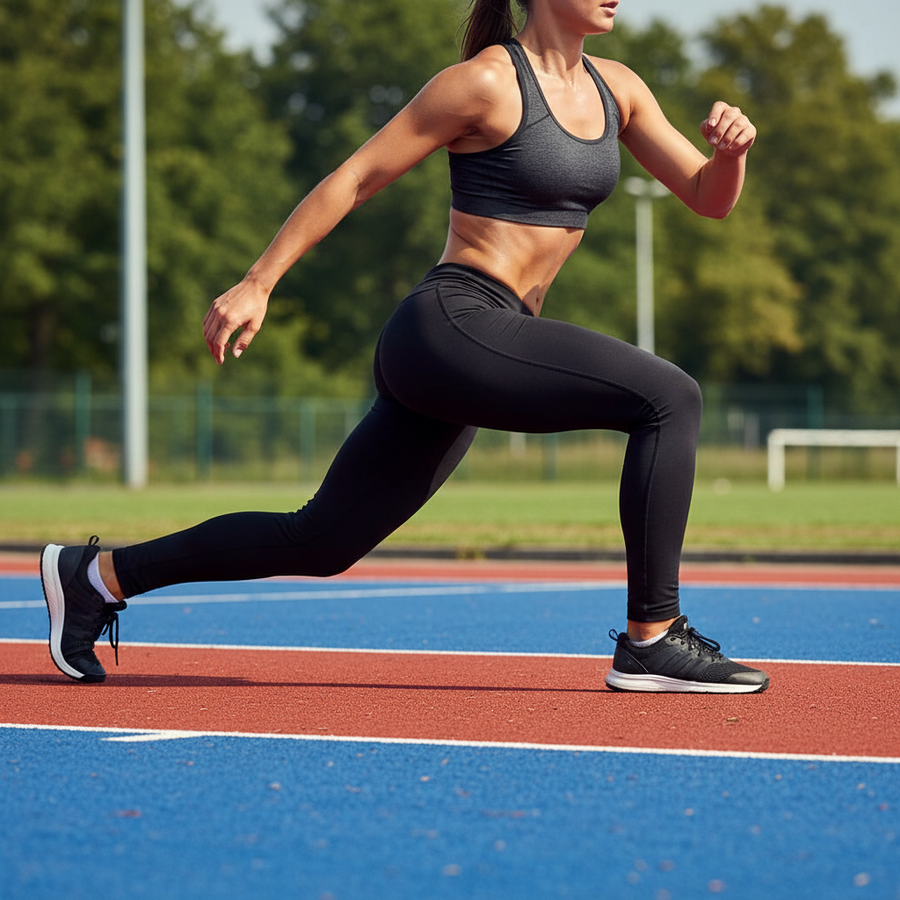
Simple Strength Training for Hockey Players

Why Strength Training Matters for Hockey Players

Hockey places specific physical demands on the body that are distinct from those of purely running-based or upper body sports. Players spend significant time in a low, forward-leaning posture while dribbling and defending, which places sustained load on the quadriceps, hamstrings, glutes, and lower back. Explosive actions such as sprinting, hitting, and competing for the ball in aerial duels require the rapid production of force through the hips and legs. Tackling and shielding involve upper body and core engagement that aerobic training does not develop adequately on its own.

The case for strength training in hockey is not about building bulk. It is about developing the physical resilience and force production capacity that allows a player to perform the technical skills of the game more effectively and sustain that performance across a full 60-minute match. Players who carry adequate lower body and core strength maintain better posture and stick position under fatigue, recover faster between sprint efforts, and are less susceptible to the soft tissue injuries, particularly hamstring strains and groin problems, that are common in the sport at all levels.

The Key Movement Patterns Hockey Players Should Train

Strength training for hockey is most effective when it targets the movement patterns the sport actually demands rather than training individual muscles in isolation. The five movement patterns most relevant to hockey are hip hinging, squatting, single leg work, horizontal pushing and pulling, and core anti-rotation. Hip hinging movements such as deadlifts and Romanian deadlifts develop the posterior chain, the combination of glutes, hamstrings, and lower back, which is the primary source of power for sprinting and hitting. Squatting patterns develop the quad-dominant strength needed for low body position and explosive leg drive.

Single leg exercises such as split squats and single leg Romanian deadlifts are particularly valuable in hockey because so much of the sport's movement involves one leg driving while the other stabilises. Bilateral strength built through squats and deadlifts is important, but converting that strength into single leg function requires specific training. Horizontal pushing, such as press-up variations, and horizontal pulling, such as rows, develop the shoulder and upper back strength used in hitting mechanics and physical contests. Core anti-rotation exercises train the torso to resist unwanted twisting forces, which is directly relevant to maintaining stick position and body control when competing physically. An overview of how these physical qualities connect to the game itself is available through the hockey guide on Effort Does It.

Simple Exercises That Build Hockey-Specific Strength

A simple and effective strength programme for a hockey player does not require a large exercise selection. Five to seven well-chosen exercises performed consistently produce better results than a complex programme done inconsistently. The goblet squat is an accessible starting point for lower body strength, using a dumbbell or kettlebell held at the chest while squatting. It teaches correct squat mechanics, develops quad and glute strength, and requires enough core engagement to serve as a useful introductory exercise before loading heavier with a barbell.

The Romanian deadlift, performed with dumbbells or a barbell, develops the posterior chain through a hip hinge pattern and has a direct carryover to the low body position and explosive hip extension used in hockey sprinting and hitting. The Bulgarian split squat, performed with the rear foot elevated on a bench, is one of the most effective single leg strength exercises available and requires no equipment beyond a bench and a pair of dumbbells. For upper body and core work, the dumbbell row targets the upper back muscles that support hitting mechanics, while the pallof press trains core anti-rotation in a standing position that closely mirrors the demands of physical play. Understanding how competition formats influence the physical demands placed on players is covered in the rules & formats section on Effort Does It.

How to Structure Strength Training Alongside Hockey

Fitting strength training into a hockey schedule requires some planning to avoid arriving at training or matches with heavy legs from the previous session. Two strength sessions per week is a practical and effective target for most club-level players. These sessions work best on days that are separated from high-intensity hockey training or match days by at least 24 hours, and ideally 48 hours when the strength session involves heavy lower body loading.

A session structure that works well for hockey players involves a brief movement warm-up of five to ten minutes, followed by two or three lower body strength exercises, one or two upper body exercises, and one or two core exercises. Total session time including warm-up should sit between 45 and 60 minutes. Rep ranges of four to six per set develop maximal strength, while eight to twelve reps per set develop hypertrophy and muscular endurance. For most hockey players, beginning with eight to twelve rep ranges builds a useful foundation before progressing to heavier loads. Strength gains from a consistent two-session-per-week programme become noticeable within six to eight weeks, and the carryover to on-pitch performance, particularly in physicality, sprint endurance, and injury resilience, follows shortly after.

Summary

Strength training for hockey does not need to be complicated to be effective: two sessions per week built around hip hinging, squatting, single leg work, and core stability delivers real improvements in power, resilience, and on-pitch durability. The key is consistency and choosing exercises that reflect the movement demands of the sport rather than generic gym routines. Players who are newer to hockey will also find the beginner's guide on Effort Does It a useful starting point for understanding the broader demands of the game.